Bruce Adam: Thanksgiving Through Family Lineage
The fourth Thursday of each November, America celebrates the Thanksgiving holiday. This national holiday is celebrated by millions. Popular forms of celebration are, the Macy’s Thanksgiving Day Parade, running races, volunteering, or by a large dinner with family. The holiday’s roots start in the year 1620 when Pilgrims landed in Plymouth, Massachusetts.
In 1620, the Mayflower, a 106-foot long, 25-foot wide ship carrying 102 Puritans, left Plymouth, England in search of a new world. After enduring a 66-day journey, the Pilgrims landed near Cape Cod, Massachusetts where they settled to freely practice their religion.
Three hundred eighty-seven years after the Pilgrims landed in Massachusetts, Bruce Adam of Des Plaines, Illinois discovered his genealogy and relationship with the first Thanksgiving.

Adam is a published author with many interests and hobbies. He is a middle child, born in 1952 to Margery and David Adam in Park Forrest, Illinois. Both Margery and David moved to Illinois from Massachusetts before starting their family. Adam graduated with a Bachelor of Arts in English from Northern Illinois University and has international teaching experience. Adam has lived in France, and in various areas in New England.
In 2005, Adam published his great great grandfather, John Fisk’s, journal from the 1840’s gold rush. Fisk took the journey from Massachusetts, down through the Panama Canal in South America around to California to seek riches in the earth. Two years after publishing Fisk’s journal, a genealogist named Bruce Williams in Massachusetts was looking into John Fisk for a client and reached out to Adam about Fisk’s journal. Adam became interested in finding out more about his family history and helped Williams research Fisk. The two developed a friendship, and Adam asked Williams to help trace his family history. Shortly after investigating, Williams discovered that Adam had direct lineages to the Mayflower’s travelers, solidifying his roots.
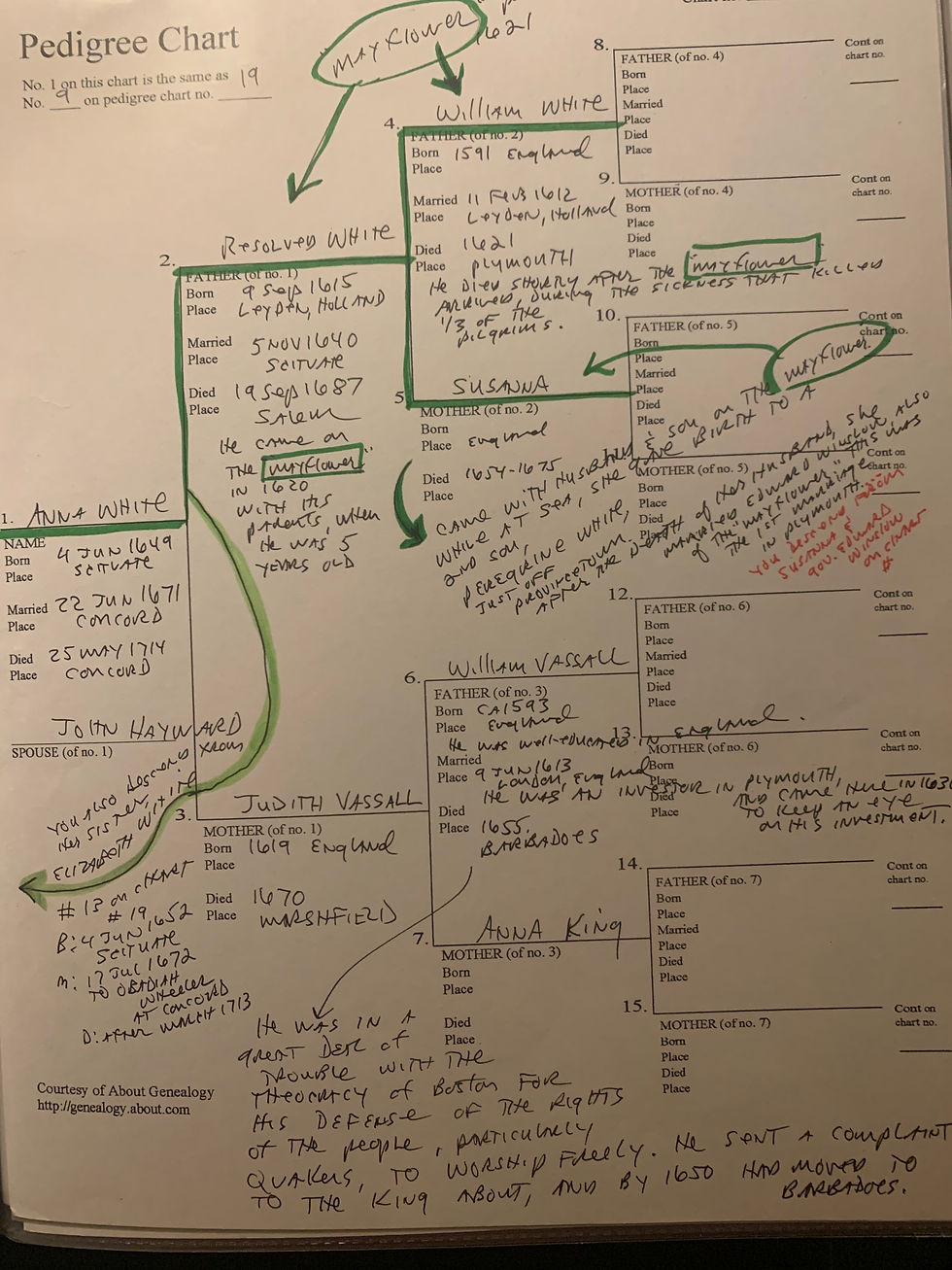
All of the known Mayflower descendants alive today can trace their lineage to a total of 22 male passengers. Adam is able to track his lineage back to five. The five lines he has found are to the Pilgrims: Edward Winslow, Richard Warren, William White, Thomas Rogers, and James Chilton.
To become part of the Mayflower Society you must present birth certificates, death records, or other specific documents to provide proof that you are a descendant. Bruce, in 2009 put in the work to verify one of his lines.
“I have five lines now, but they did have to be verified, and that’s not easy. I did go out and verify one with Bruce Williams…[he and] I drove all around the Cape, and around Plymouth going to the various city halls, we had a couple of leads. And we got some of the old workbooks from the 1700s, and we tracked down the information and photocopied it and sent that in with an application and got verification from the Mayflower society on one of the lines.”
This year marks the 400th anniversary of the first Thanksgiving, and Adam is keeping his family’s tradition alive. Like many Americans, Adam places a priority on the food that is set on the Thanksgiving Day table. Many of the dishes are traditions passed down from generation to generation.
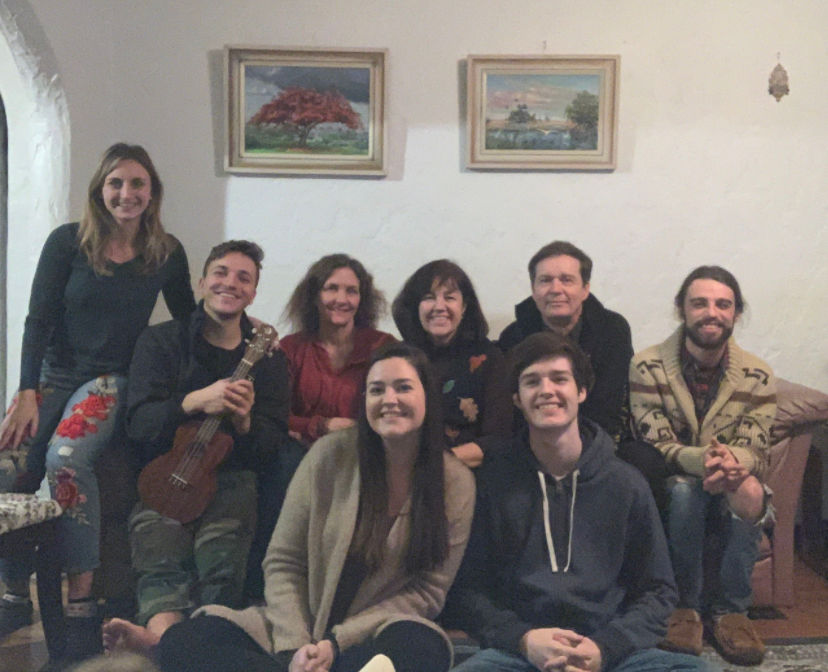
“I actually tried to do things like making the Indian pudding that everybody likes so much. That's a very, very old dish that was made from very common table items like flour, cornmeal, salt, sugar, eggs, milk, and molasses. That’s really all that it is. And it's a series of steps, but it's been made for hundreds of years. We had it for Thanksgiving in my family, and I tried to keep it in ours too.”
Indian pudding gets the name from the transformation from a traditional colonist hasty pudding to the introduction of cornmeal which was learned how to cultivate from indigenous peoples leading to the name, Indian pudding. Adam has made this pudding for his family for over a decade and has become a staple at his Thanksgiving feast.
With the large anniversary happening this year, Thanksgiving has a special meaning to this Mayflower descendant. There is more to the story of the first Thanksgiving than just the meal. Adam reflected on the hardship of his ancestors and the meaning of Thanksgiving:
Transcription: “I always think about it, I think about their hardships and the stories about how difficult it was and how many of them died in that first winter. And all of the ways that they, they survived and there are also stories that go beyond the first Thanksgiving to, you know, a generation later when they were more largely established community. I mean, this thing, the reason that the Mayflower is so remembered and so important is because it lent itself to the history of this country through people. Whereas it wasn't the first colony. Jamestown was the first colony, but Jamestown was wiped out, so there were no survivors from Jamestown. But the Plymouth Colony survived and thrived. And there are 1000s and 1000s of people related and connected to the Mayflower”
Over half of the 102 Pilgrims did not survive the first winter from their first arrival in 1620 to 1621. The first thanksgiving was in 1621, after their first full harvest. Their first year in the “new world” allowed for the Pilgrims to learn from indigenous peoples, and their bountiful fall harvest meal was the first Thanksgiving.
Millions of people worldwide are descendants of the Mayflower and are members of the Mayflower society. To many of them, Thanksgiving holds a special place in their heart. For Adam, Thanksgiving means being thankful, showing gratitude to the Lord for family, friends, food, and health. To celebrate together sharing in love and happiness, and to immediately follow dinner with warm Indian pudding with vanilla ice cream!
Supplemental Photos:

Sources:


Comments